Learning Hub

Expert articles on Abacus, Vedic Math and mental math — helping parents and kids worldwide.

How Abacus Learning Develops Your Child's Brain

Parents worldwide are discovering that the abacus is far more than a counting tool. Research consistently shows that children who learn abacus develop stronger cognitive abilities across multiple areas — not just mathematics.

What happens in the brain during abacus practice?

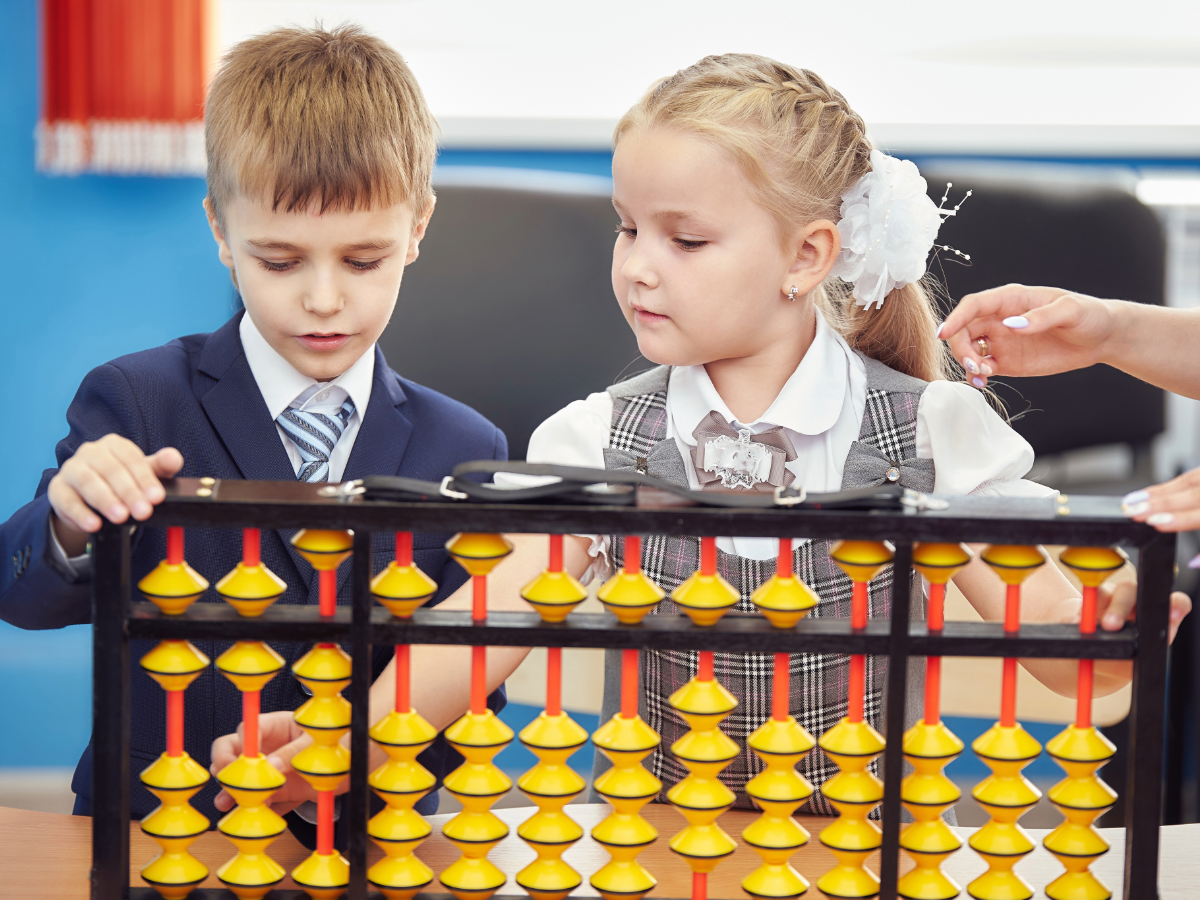
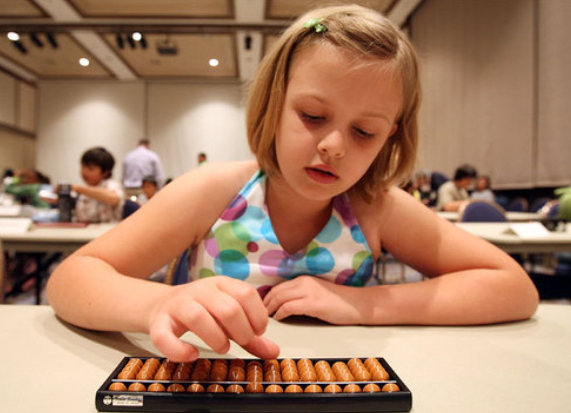
When a child manipulates abacus beads, both hemispheres of the brain activate simultaneously. The left brain handles logical calculation while the right brain processes the visual-spatial image of the beads. Over time, children develop a "mental abacus" — they can visualise and move imaginary beads in their mind to solve complex calculations without any physical tool.

5 proven cognitive benefits

  • Photographic memory: Visualising bead positions strengthens visual memory that extends to all subjects
  • Concentration: Abacus practice requires sustained focus, naturally improving attention span
  • Processing speed: Regular practice trains the brain to process information faster
  • Confidence: Mastering mental calculations eliminates math anxiety
  • Listening skills: Flash anzan (mental abacus with spoken numbers) sharpens auditory processing

At what age should children start?

The ideal age to begin abacus training is between 4 and 7 years, when the brain is most plastic and receptive to new learning patterns. However, children up to 14 years benefit significantly. Our Abacus Young Star program is designed specifically for UKG to Grade 1, while Abacus Junior covers ages 7–14.

How long before results show?

Most parents notice improved concentration and number sense within 2–3 months. Mental calculation speed typically improves noticeably after 6 months of consistent practice (2 classes per week).

Want to see the difference abacus makes for your child?

Book a Free Demo Class

5 Vedic Math Tricks That Make Multiplication Effortless

Vedic Mathematics is a system of mental calculation techniques derived from ancient Indian scriptures. These methods allow students to solve complex problems in seconds — often faster than a calculator. Here are 5 techniques your child can start using today.

1. Multiply any number by 11

To multiply a 2-digit number by 11, simply add the two digits and place the result in the middle. For example: 35 × 11 = 3(3+5)5 = 385. If the middle sum exceeds 9, carry over to the left digit.

2. Square numbers ending in 5

To square any number ending in 5: multiply the first digit(s) by the next number up, then append 25. Example: 65² = 6×7 = 42, append 25 = 4225. Works for any size number.

3. Multiply numbers close to 100

For numbers near 100, find how far each is from 100, multiply those differences, and adjust. Example: 97 × 96 = (97-4)(3×4) = 9312. This is the "base method" — one of the most powerful Vedic sutras.

4. Instant subtraction from 1000

To subtract any number from 1000: subtract each digit from 9, except the last which you subtract from 10. Example: 1000 - 357 = (9-3)(9-5)(10-7) = 643. No borrowing needed.

5. Multiply by 5 instantly

Dividing by 2 and multiplying by 10 is always faster than multiplying by 5 directly. Example: 348 × 5 = 348 ÷ 2 × 10 = 174 × 10 = 1740. Works for any number.

Why these techniques matter for school exams

In competitive exams like NTSE, Olympiads, and board exams, speed matters as much as accuracy. Students who know Vedic Math techniques consistently finish papers faster and with fewer errors.

Want your child to master all 16 Vedic Math sutras?

View Vedic Math Programs

How to Choose the Best Online Abacus Classes for Your Child

With hundreds of online abacus programs available worldwide, choosing the right one for your child can feel overwhelming. Here's a practical guide to help you make the right decision — whether you're in India, UAE, UK, Singapore, USA or anywhere else.

What to look for in an online abacus teacher

  • Certification: Look for teachers certified by recognised bodies like Aristo Kids, UCMas, or SIP Abacus
  • Experience: At least 3–5 years of teaching children specifically (not just adults)
  • Class size: Smaller groups (1-on-1 or max 4 students) give better results than large batches
  • Free trial: Any reputable teacher will offer a free demo class — never pay upfront without trying first
  • Structured curriculum: There should be clear levels with assessments, not just ad-hoc practice

Online vs offline — which is better?

Research shows online abacus classes produce equivalent results to in-person classes when taught by a skilled instructor. The key advantages of online are flexibility of timing, no commute, and access to better teachers regardless of your location. Many of our students in UAE, Singapore and the UK achieve the same results as local Bangalore students.

What equipment does your child need?

  • A physical abacus (we can ship one to you — see our Kit Order page)
  • A tablet or laptop with a stable internet connection
  • A quiet space with good lighting for 30–45 minutes per session

Red flags to avoid

  • Teachers who promise results in "just 1 month" — genuine abacus mastery takes 6–30 months
  • No structured levels or progress tracking
  • Large batch classes of 10+ students where individual attention is impossible
  • No free trial offered

Experience our teaching style risk-free — no commitment required.

Book Your Free Trial Class